A Quick Way to Develop a Color Palette (Photoshop Elements)

Sometimes when creating a design (fabric or otherwise) it’s helpful to work with a fixed palette of colors.  The inspiration for a color palette can come from anywhere, and I find that photos are often a great source of color palettes.  In this post, I’ll show how to quickly create a color palette (called a color table in Photoshop) from a photo.  You can then use the color palette to create your own designs.

This post compliments a couple of my previous posts where I talked about how to color-reduce a photo in Photoshop Elements, and then how to generate a Color Table from the color-reduced photo and use the color table to create coordinating designs. Continue reading

Color Reducing a Design — What is it and Why Bother?

Most printed commercial fabrics today are made using some form of screen printing technique.  This requires a separate screen for each color which will be printed.  More colors mean more screens and higher manufacturing costs.  To keep costs down, designs may be color reduced to use fewer colors in the final manufacturing set up.

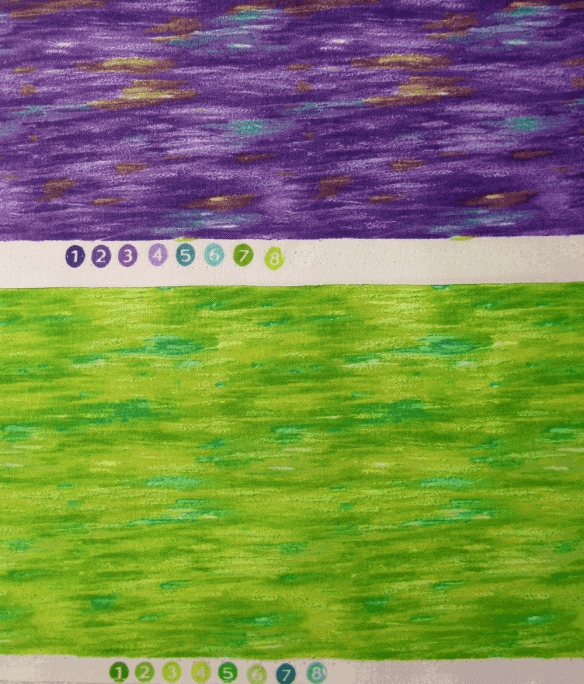
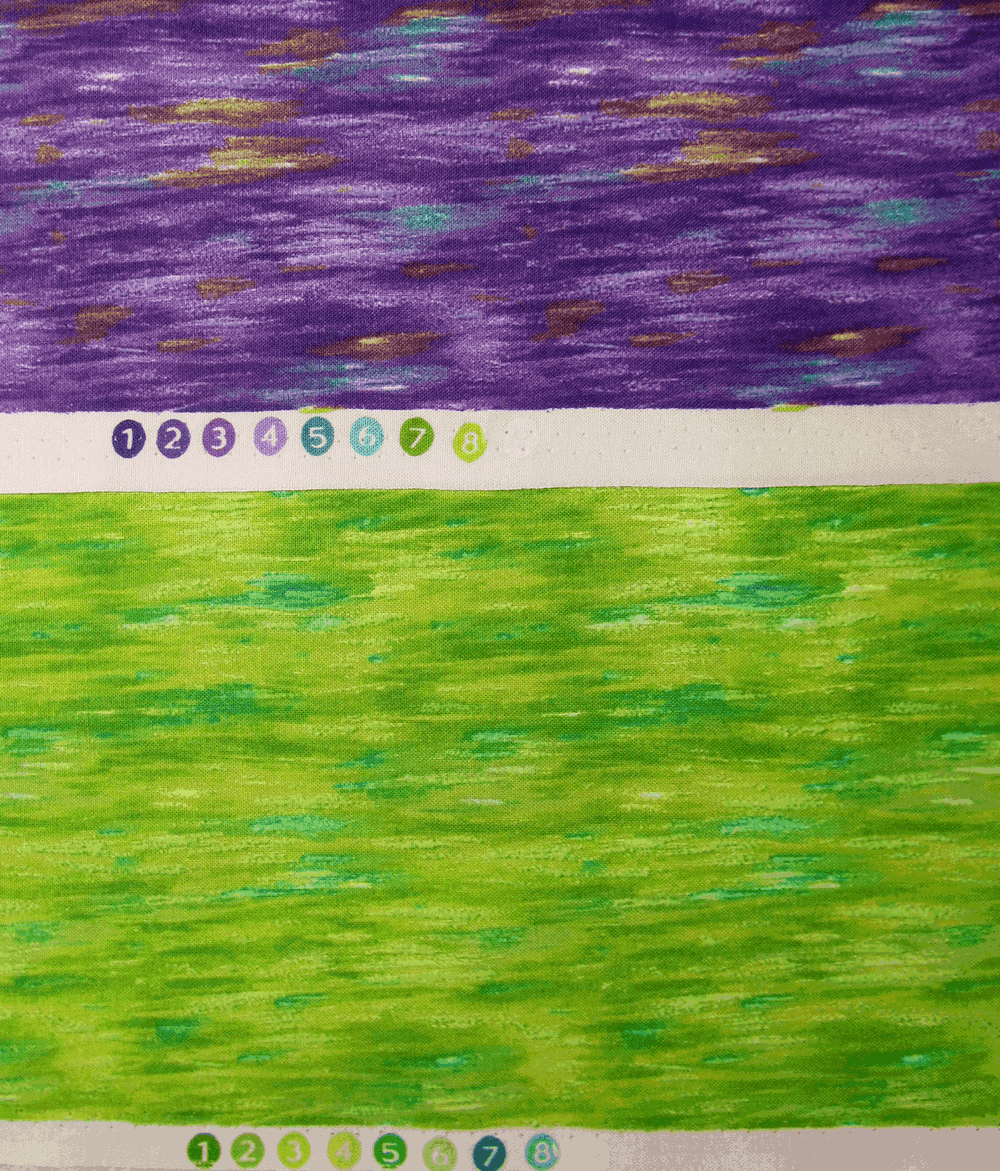
Printed commercial fabrics will often show the colors used in the printing process as numbered circles along the selvage of the fabric.  Shown below are two colorways of the same design from Timeless Treasures.  Each fabric was printed using the same screens, but 8 different colors, and the end results are different, with more contrast in the first fabric.
The design process for a commercial fabric might start with a hand-drawn or hand-painted design which is then scanned into a computer where the design and its repeat are finished.  However, scanning an image is likely to result in thousands of colors–way too many for screen printing.  A big part of the computer side of the design process is to reduce the number of colors to a manageable number–often less than a dozen–without sacrificing the quality of the original artwork.  Once the “color reduction” is done, it’s a simple matter  to change the colors to generate different colorways of the same design.

Digital printing technology allows anyone to print on fabric with virtually an unlimited number of colors.  For many situations, there’s absolutely no need to color reduce a design before printing it with either your own inkjet printer or through one of the on-demand printing services  (see here for some places to print your fabric).

Even though digital printers print with a huge range of colors, there are still some situations when color reducing a design is useful.

Color matching–When printing fabric on an inkjet printer, the colors you see on your computer screen are not always the colors you get on your fabric out of the printer.  This can be frustrating and expensive.

A way to minimize this issue is to create your design using colors which you know how they will print on fabric.  Most of the on-demand printing services offer color swatches and the corresponding digital file so you can see the printed color on fabric compared to the color on your computer screen–here’s an example of Spoonflower’s color guide.  If you’re printing on your own inkjet, you can create and print your own color guide.  When you use colors in your design from your color guide, you can be confident how the colors will print on fabric.

When you start your design with a photo or a scanned image, you might have colors in your design that you aren’t sure how they will look printed on fabric.  Using Photoshop Elements (or other digital editing tools) you can replace colors in the design with known colors from your color guide.  However a photo or scanned image might have thousands of colors, so to make color replacement manageable, the design first needs to be color reduced to a much smaller number of colors.

Colorways and color palettesTwo more reasons to color reduce a design are to create the design in different colorways or to create designs using a common color palette.  I used these techniques in creating the designs for my Echinacea collection.

I started with the ‘focus fabric’ shown below.  This design was color reduced to 64 colors.

Using Photoshop, I selected from the 64 colors in the design to create separate color palettes of blues, pinks and oranges.  Then I replaced all the colors in the design with the blues to get the blue version of the coneflowers (below).  Using this version of the design (now with about 10 colors rather than 64) I replaced the blues with pinks and then with oranges to get the different colorways.

I used the same color palettes to create the stripe fabrics to coordinate with the floral prints.  You can see more fabric designs using these colors here.

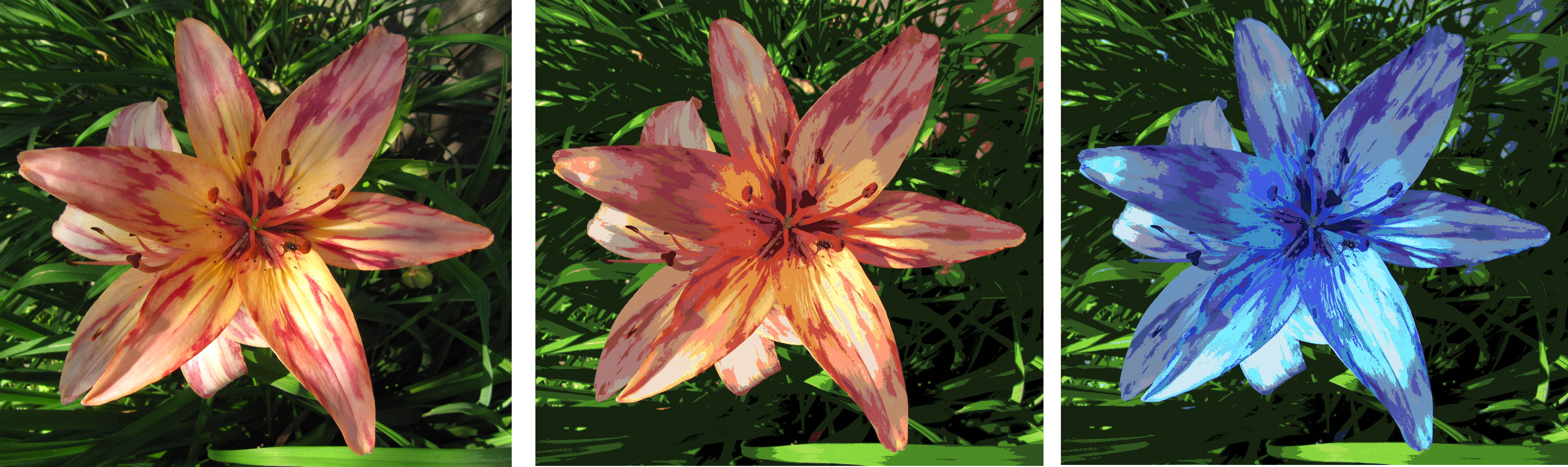
In upcoming posts I’ll discuss how to use Photoshop Elements to color reduce a design.  An example is below–the original photo is on the left, the color reduced design is in the middle, and a recolored version is on the right (zoom in to see the differences).

Dorothy:  What kind of a horse is that?  I’ve never seen a horse like that before! 
Cabby:  No, and never will again, I fancy!  There’s only one of him, and he’s it.  He’s the Horse of a Different Color you’ve heard tell about! 
–from the Wizard of Oz

[looking for a certain type of flower]   Blue flower, red thorns. Blue flower, red thorns. Blue flower, red thorns. Man, this would be so much easier if I wasn’t COLOR-BLIND!
–Donkey in Shrek

Creating Your Own Plaids in Photoshop Elements

A plaid, or Tartan, pattern consists of criss-crossing bands of different color threads in the lengthwise (warp) and crosswise (weft) orientations.   The distinctive diagonal lines in  plaids are created by weaving in a twill pattern.  To create a plaid effect in Photoshop Elements we need to be able to mimic the twill weaving pattern.  Continue reading

Black and White Fabric Designs

Spoonflower has a fabric design contest coming soon with a theme of black and white — the designs can only use black and white, no shades of gray allowed.

I’ve been playing with some of my photos of coneflowers, and converting them to look like pencil drawings.

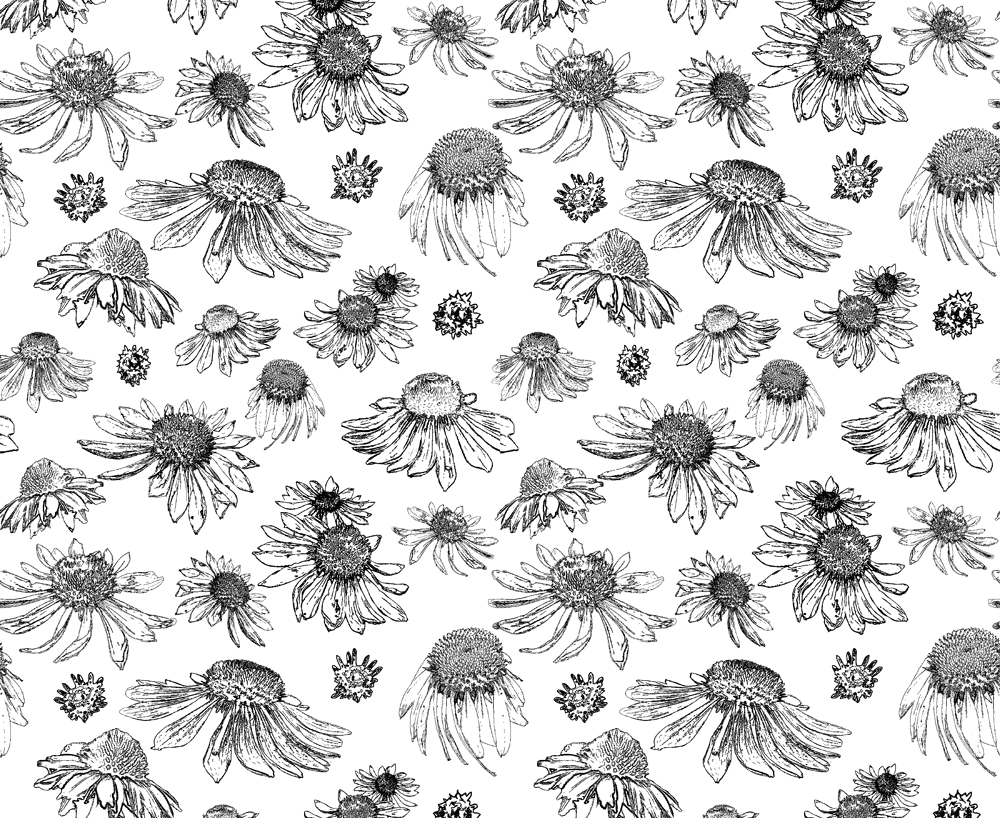
Here are a couple of draft designs, both representing a fat quarter of fabric–22 inches by 18 inches.  This was my first attempt, but I think it’s a bit too busy, and some of the areas are too dark.

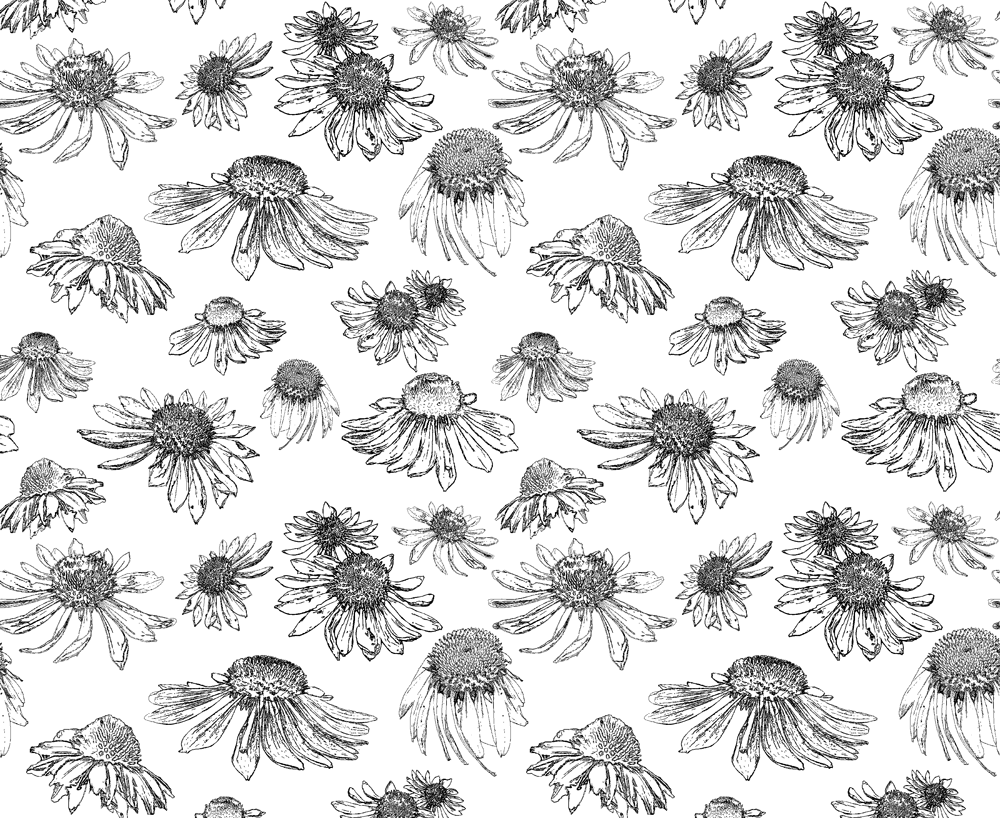
Here’s another version, with some of the elements taken out, and some of the lines lightened up a bit.  I like this one better, but I’ll probably rearrange the flowers a bit more.

I’ve also been working on a larger drawing to use in a quilt.  Here’s what I have so far.  My plan is to print this on white fabric and then add thread painting to get sort of a watercolor effect.

If you want to look at some great botanical art, check out Science-art.com and search on any keyword, such as coneflower.

Making a Repeat Pattern Look Less Boxy – Photoshop Elements

If you’re designing a repeat pattern in Photoshop Elements, there’s an easy way to make it look less boxy.  The trick is to have design elements which overlap the edges of the tile.

I started with this simple tile.  Each of the design elements is in its own layer in Photoshop.  The tile creates this repeat pattern — there’s clear space between the tiles.

Since each element is in its own layer, I can use the offset command (from the menu:  Filter –>Other –> Offset) to independently move each element.  You can play around with the level of offset to move any element so that it wraps around the tile horizontally, vertically or both.  When you input an amount of offset, a positive number will move the element right or down, and a negative number will move it left or up.  The big benefit of using the offset command is that you can draw/edit an individual design element in its entirety, and then later split it up across the edges of the tile.

Here’s a quick update to the original tile where I moved some of the elements (and also changed the size of some elements).  And here’s the resulting repeat which looks less boxy.

A couple things to keep in mind when using this.  The offset command shifts the entire layer in Photoshop Elements, so it works best if your overall design is in multiple layers which you can shift independently.  Any editing you want to do to your design is much easier to do before using the offset command.  If you want to edit a design after offsetting it, you will usually need to undo the offset before making the edits.

Design is a plan for arranging elements in such a way as best to accomplish a particular purpose — Charles Eames

How to Create a Seamless Repeat in Photoshop Elements – Part 2

In part 1 I showed how to create a seamless repeat by editing the edges of a tile so that they line up properly when repeated.  There’s another useful way to disguise the edges, and that’s to add new images that go across the edges of the old tile.

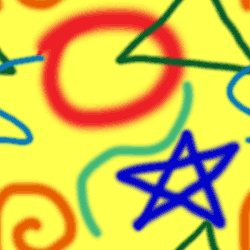
1.  Here’s a simple example of this.  I’ll start with the tile below.

2.  Next is to”cut” the tile in half both horizontally and vertically and “paste” it back together.  This is done in Photoshop Elements using the Filter –>Other –> Offset command.  (See the previous post, step 3 for details of how to do this.)  Here’s the result.

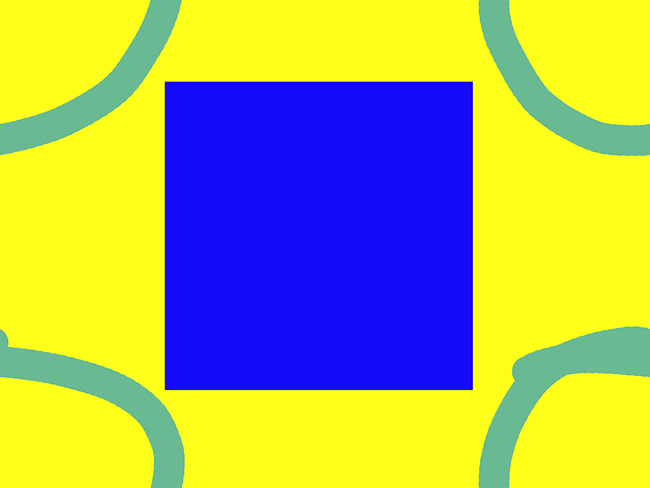
3.  I could use the techniques from Part 1 of this tutorial to get the orange lines to meet at the edges so that the repeat would be seamless.  Alternatively, I could just cover up the orange lines with something that goes across the edges.  Here I drew a square to cover up the lines.

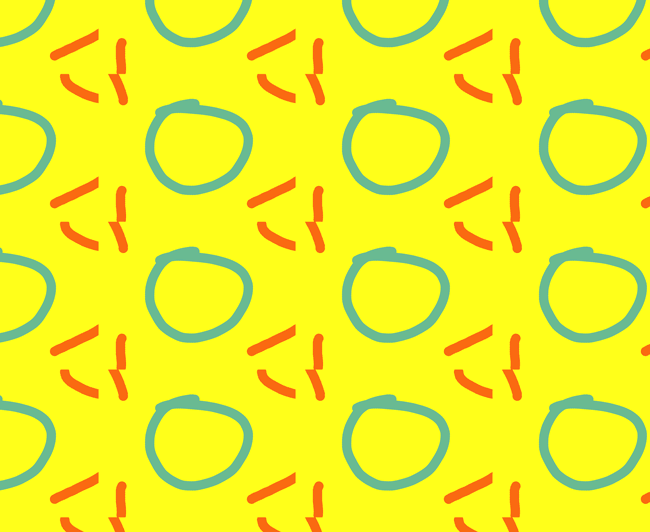
4.  Here’s what the two tiles look like in repeat.

Both techniques — fixing the edges and covering the edges — can be use to create a richer repeat pattern.  I’ll show this with the rooster image I created in Part 1 of the tutorial.  Here’s the repeat pattern after the edges were fixed.  The repeat is seamless, but there’s a lot of ‘blank’ background in the pattern.  I’ll fill this in with rooster and hen images from other photos.

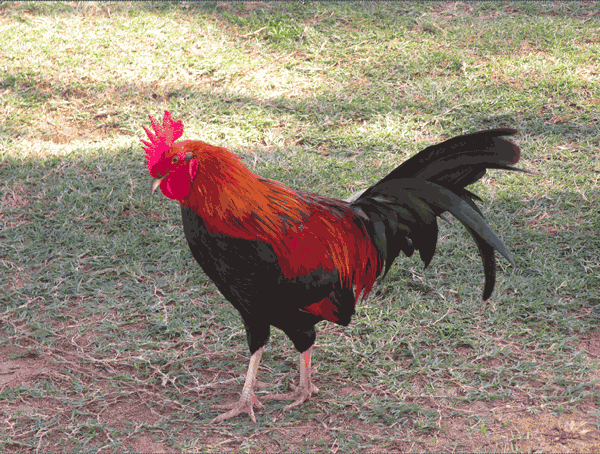
1.  Start by opening another photo with an image you want to add to the pattern.  Here’s a second rooster photo, and I’m going to use the Quick Selection Tool to select only the rooster and not the background.

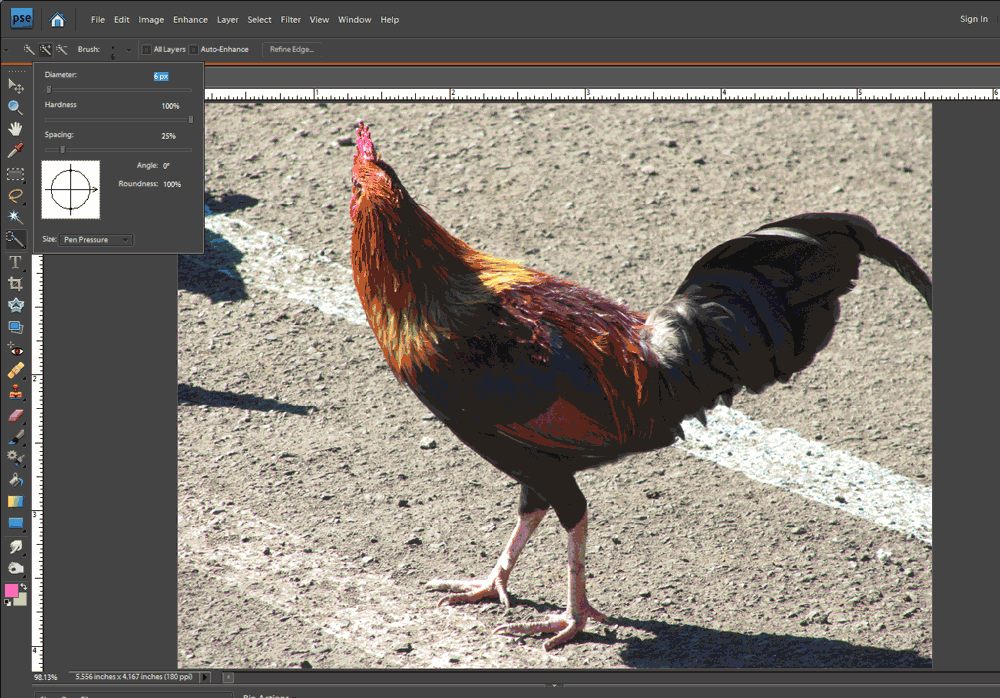
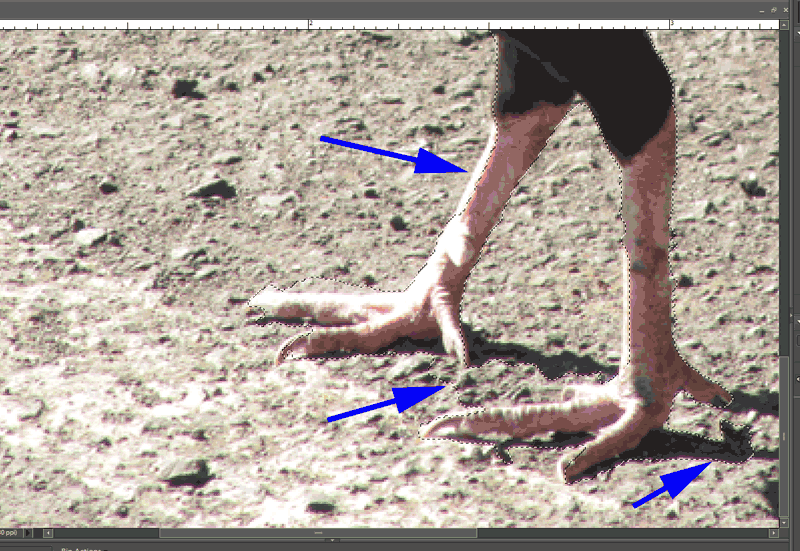
2.  After quickly selecting the rooster, here’s a screen shot where the dotted lines show the rough selection.  As highlighted by the purple arrows, there are some areas that need to be refined.

3.  Refine your selection until only the object you want to copy is selected.  The way to do this with the quick selection tool is to use the “Add to Selection”  and “Subtract from Selection” tools to nudge the selection line as needed (circled on the menu pictured to the right).  It can also be helpful to decrease the brush size when you’re trying to make fine adjustments to the selection.

4.  Once your selection is good, copy it to the clipboard using the Edit –>Copy menu command.

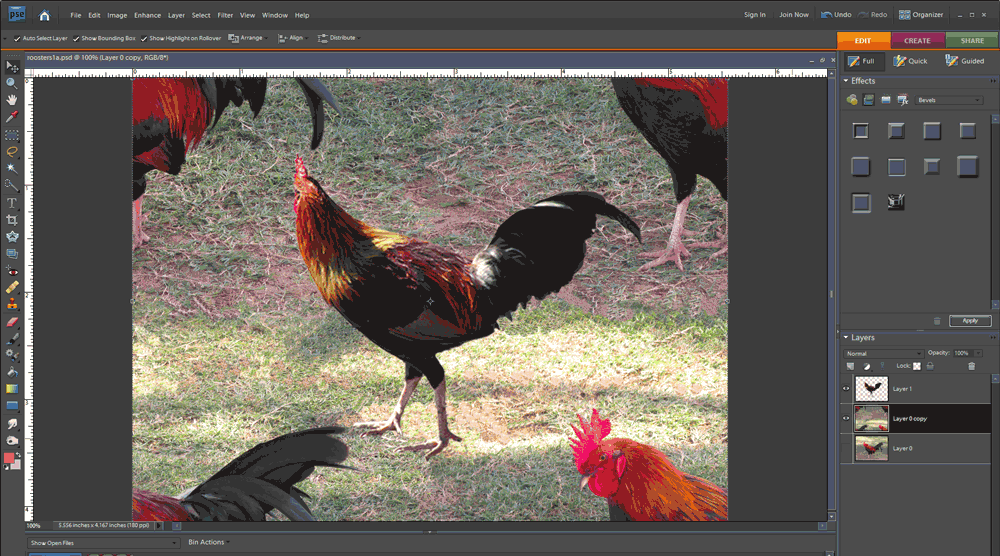
5.  Go to the file that has your original tile and use the Edit –>Paste command.  This will put your copied image into your file in its own layer, which is important so that you can move it around and change its size without changing the original tile.  Here’s a picture of the new rooster copied into the original image.

This would create the repeat pattern shown below.  Note how the second rooster image helps disguise the edges of the repeat tile.  (See Tutorial Part 1, step 6 for details of creating the repeat.)

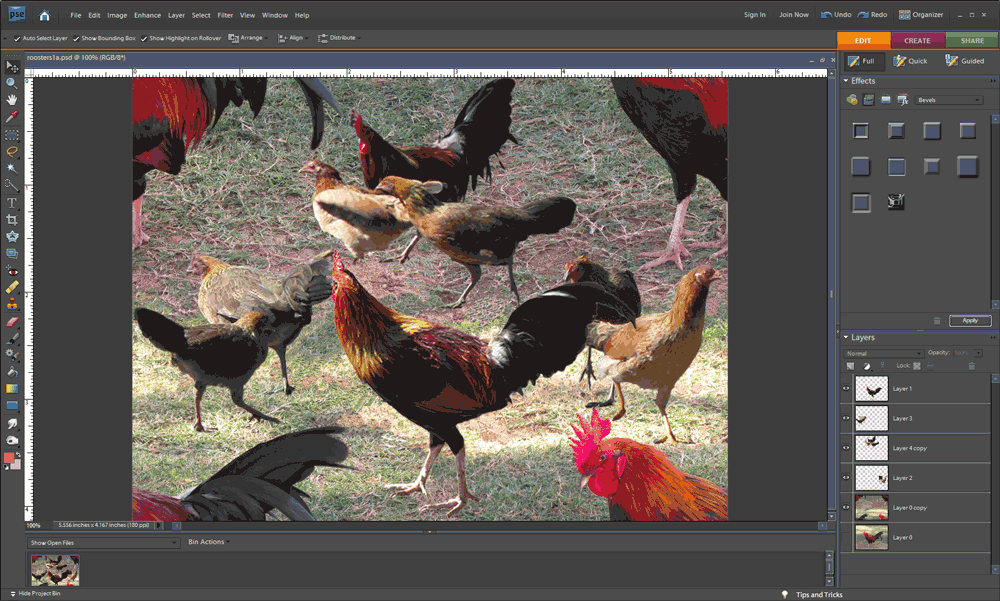
6.  If you want to add more images, repeat steps 1 through 5.  Move the new images around to get an arrangement you like.  Here’s a version with 4 added images of roosters and hens.

And here it is in repeat.  As Ludwig Mies van der Rohe said, sometimes less is more.

How to Create a Seamless Repeat in Photoshop Elements – Part 1

A key step in fabric design is being able to create a seamless repeat.  In this tutorial I’ll walk through a method to create a seamless repeat using Photoshop Elements (the steps are quite similar if you’re using Photoshop).

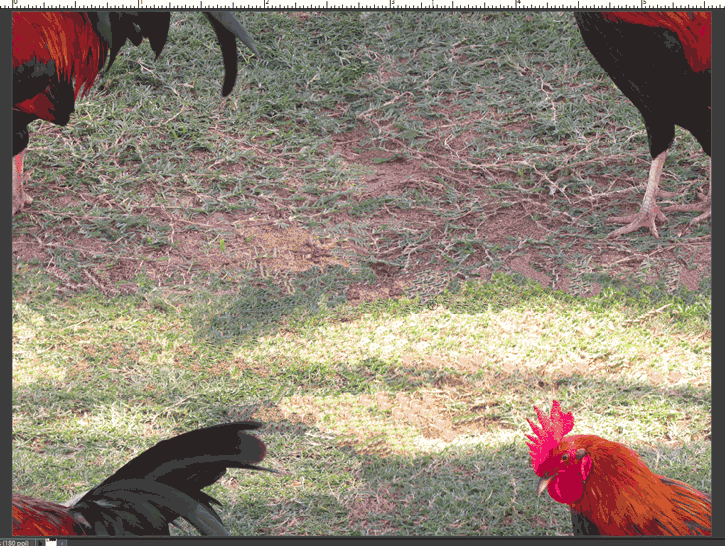
I started with this photo of a rooster (taken on a recent trip to Hawaii).  Note how the background is different in each of the 4 corners — this is what needs to be fixed to create the seamless repeat.  The photo on the right shows the photo in repeat, with the edges very distinct from one tile to the next.

1.  Open your file in Photoshop Elements.  Crop the image and make any adjustments you’d like to the photo.  The photo will be one tile of your repeat pattern.  It’s good for peace of mind to always create a duplicate layer just in case you mess up the photo too much and want to start over.

2.  Note the size of your image  in pixels (Image –>Resize –>Image Size).  For my photo, the image size is 1000 pixels by 750 pixels.

3.  In this step, we’ll “cut” the photo in half both horizontally and vertically.  This will show us where the edges and corners are mismatched and need fixing.  From the menu, choose Filter–>Other–>Offset.  In the pop-up box, divide the width of your image, in pixels, by 2 and type the number in the Horizontal offset box.  Then divide your image’s height by 2 and type the number in the Vertical offset box.

The result shows the photo “cut” up and pasted back together, and there are two clear lines through the middle vertically and horizontally where the photo doesn’t blend seamlessly.

4.  In this step we’ll fix these edges.  There are several different tools in Photoshop Elements you can use to make these edits, depending on your photo and your preferences.  There’s the clone stamp tool, smudge tool, and paint brush tool.  I used the healing brush tool.  Using a series of small fixes, I blended the two sides of each edge to remove the harsh transition.

In this photo, the edges all occur in the photo’s background, so there aren’t any really distinct features.  If you’re working with an image where there are distinct lines across the edges, these need to be fixed carefully so that the repeat ends up seamless.  Here’s the photo (or tile)  after all the edges were cleaned up.

6.  At this point, if you’re done with your image, or if you just want to see how it looks in a repeat, the next step is to define the repeat pattern. Do this from the menu:  Edit–>Define Pattern, and save it with any name you’d like.  Then, create a new blank file in Photoshop Elements.  Make sure it’s large enough to show at least 2 tiles both horizontally and vertically.  From the menu, choose Edit–>Fill Layer.  In the pop-up (shown below on the right) in the Contents section, choose to use Pattern from the drop-down list, and then select your new pattern from the Custom Pattern list, then click OK.

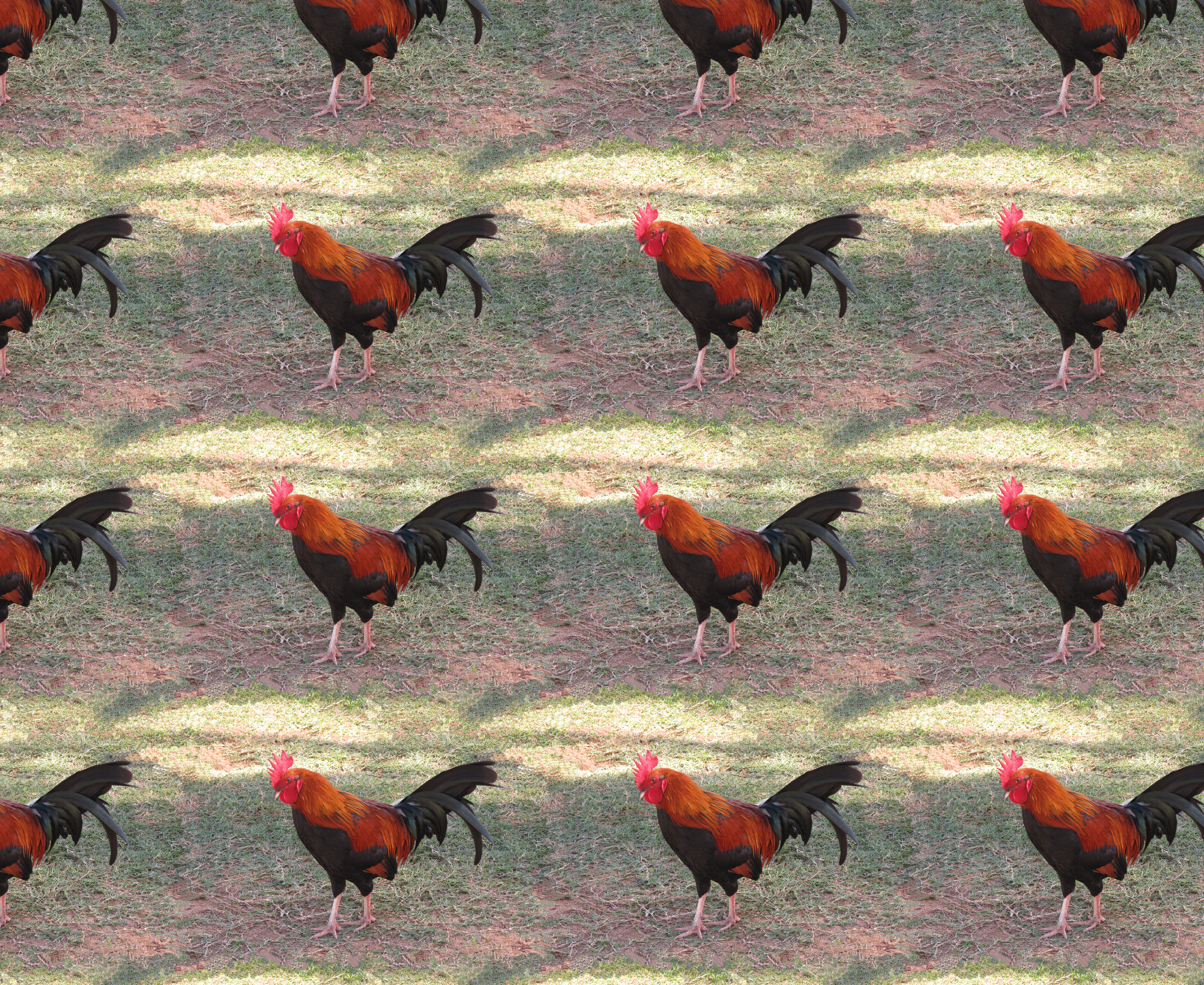
This tile creates the following repeat pattern, and the tile edges are pretty much gone.