Two of my quilts, Daylily #2 and Fireworks, are in the July AAQI auction.
Fireworks was inspired by some journal entries by my mother, Marion , written in 1937 when she was 14 years old.


Two of my quilts, Daylily #2 and Fireworks, are in the July AAQI auction.
Fireworks was inspired by some journal entries by my mother, Marion , written in 1937 when she was 14 years old.
One of my small quilts, Cone Flower, is part of this month’s quilt auction benefiting the Alzheimer’s Art Quilt Initiative. This non-profit, all volunteer group has raised over $520,000 for Alzheimer’s research since 2006.
Below are some of the other quilts. You can see all the quilts up for auction (and place your bids) here.

Here’s Cone Flower, my quilt in the auction:

You can see a short video of the new traveling exhibit Alzheimer’s Illustrated: From Heartbreak to Hope here.

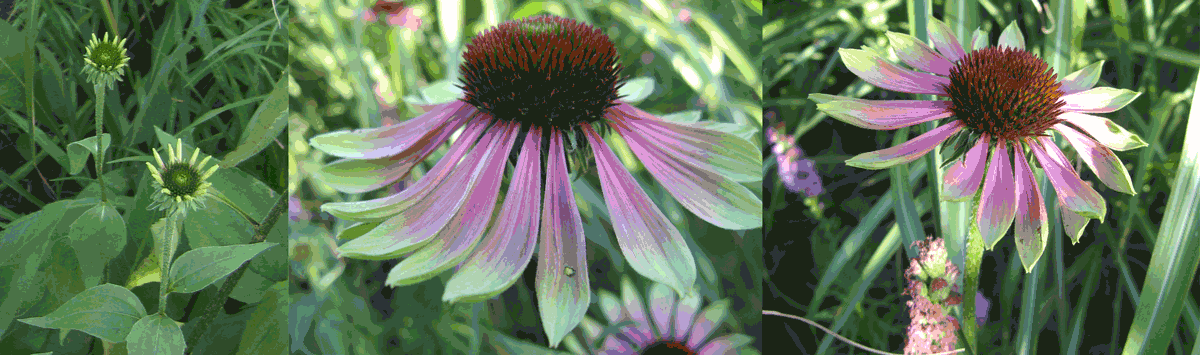
I thought I’d try to make a small quilt with sort of a ‘watercolor’ feel. I started with these photos of coneflowers from my back yard.
After a lot of playing in Photoshop, I reduced the photos to this black and white ‘sketch’ — if I could only draw, this would have been done a lot faster.

I printed this on some cotton fabric and backed it with some stabilizer and then I experimented with different thread options for the leaves.

Even with stabilizer, and using a hoop while thread painting, the fabric was bunching up a bit. Also, the white fabric showing through the thread wasn’t giving me the look I was after, so back to Photoshop. I painted the sketch with multiple transparent layers to get a watercolor look.
Here’s the result after printing on fabric.
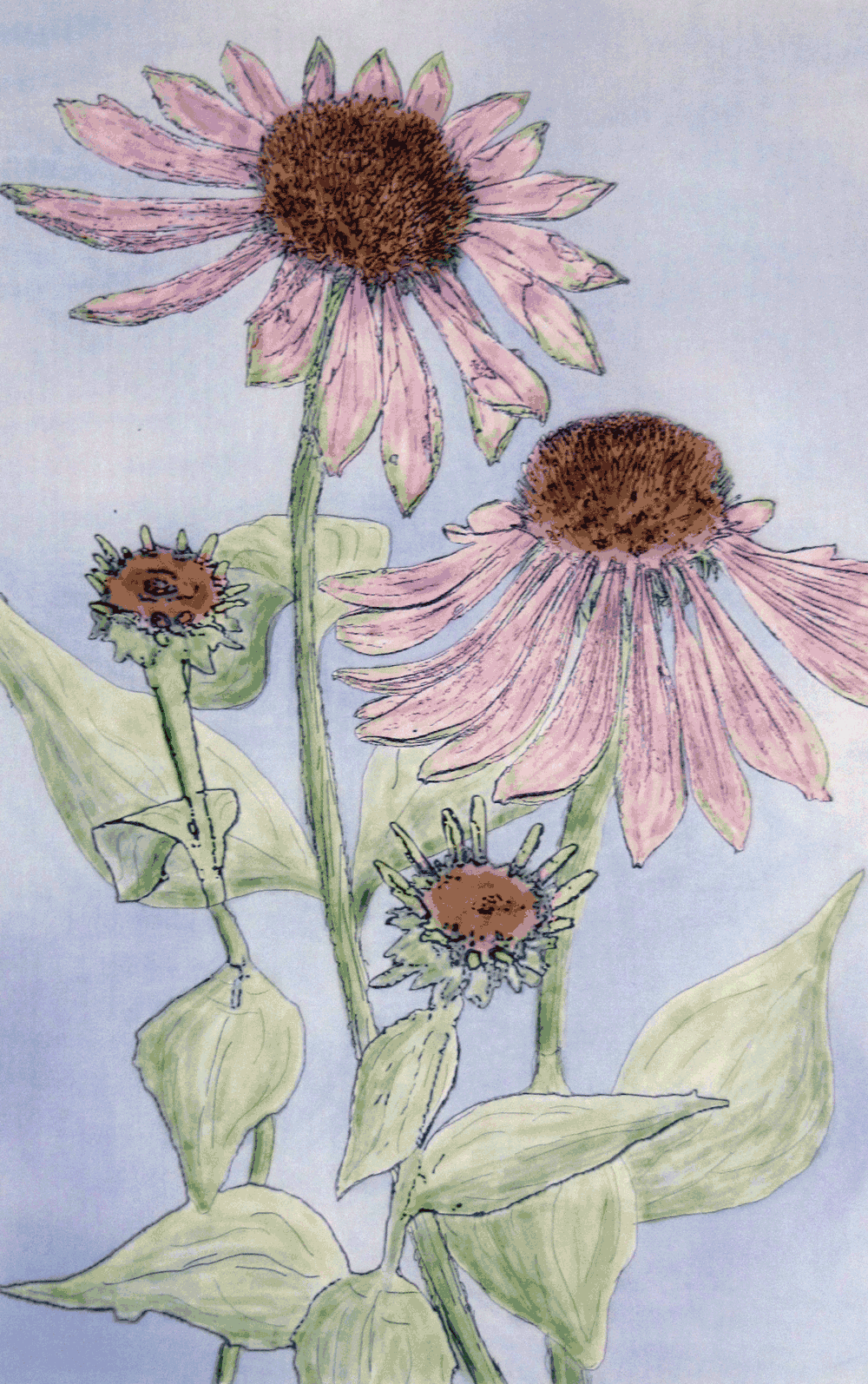
Before starting with the thread, I backed this with an ultra-firm stabilizer (peltex #72) and a backing layer of fabric. I started the thread painting on the stems, and kept it fairly light, but when I got to the leaves, the thread started building up pretty heavily.

At this point I knew the ‘watercolor’ idea was long gone, but I was liking the heavy thread work, and at least a tiny bit of the fabric color was showing through.
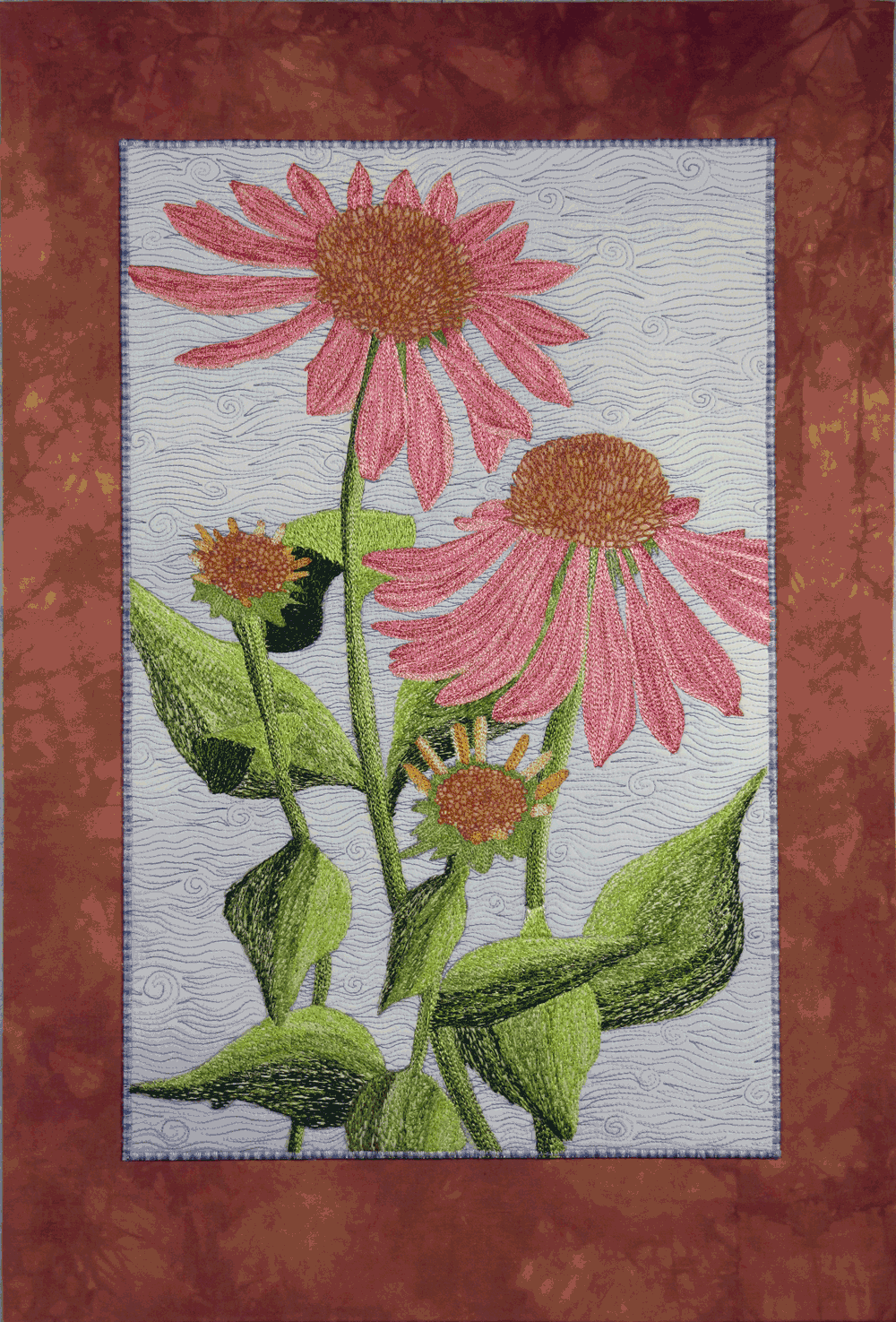
Here’s the finished quilt, Coneflowers. It’s 17 inches wide by 25 inches long.
And here’s a detail view.
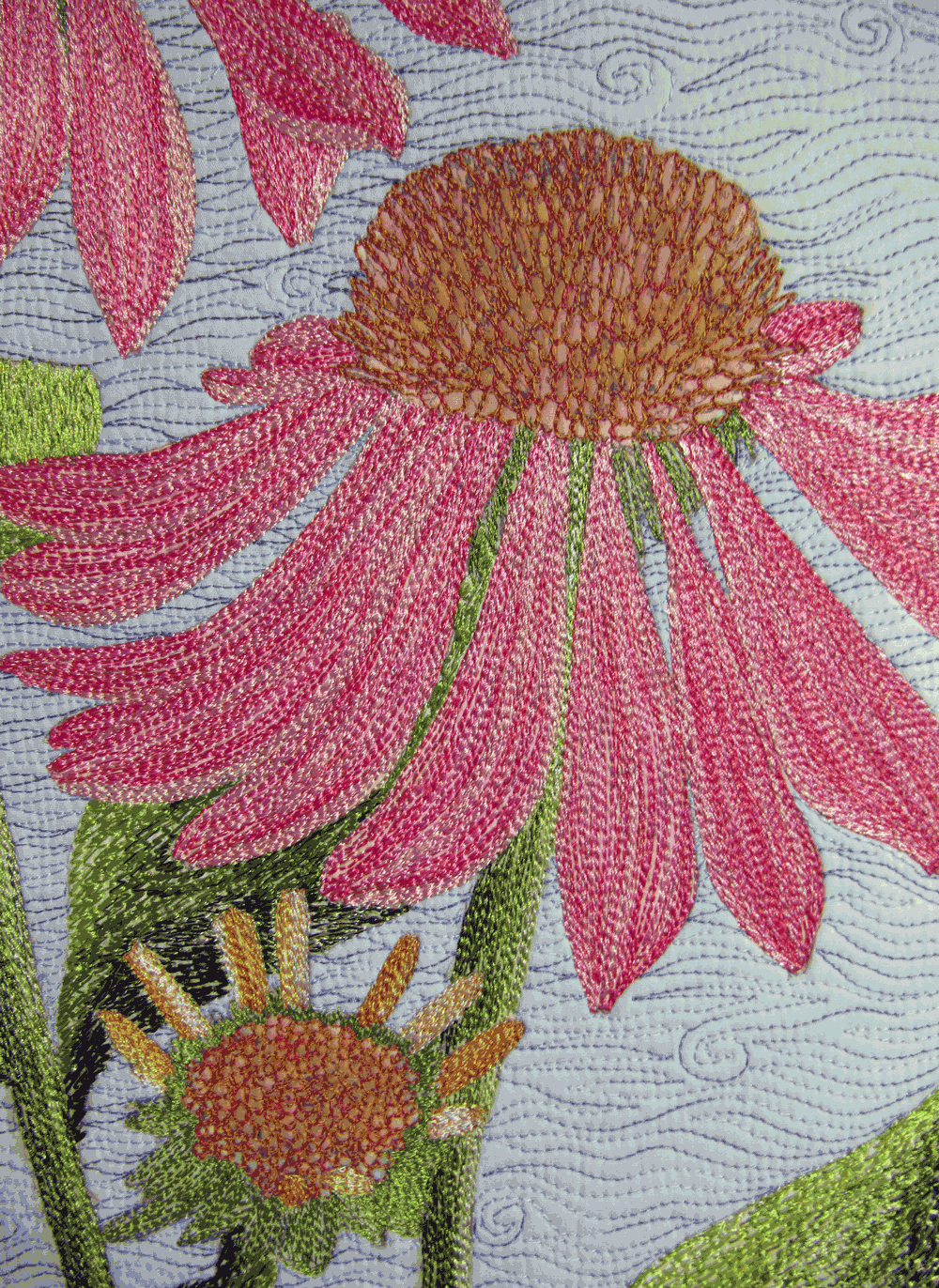
I really like how it turned out, though it’s nothing like I intended. I think I might go back to the black and white sketch and try another version, but with much less thread work.
In honor of National Poetry Month, I wrote this haiku after working for hours on this thread painting:
Coloring with thread
Quilting or Embroidery?
Love all the texture.
I finished the last 3 of my recent batch of small quilts for the AAQI. These each started as photo that I took and then played with in Photoshop before printing on fabric. I finished each of these using the stabilizer ‘frame’ that I described in this post. There’s a size limit of 9 by 12 inches on the AAQI quilts, otherwise I’d have made the frames a bit wider for each of these quilts.
Pink Daisy was actually a plain white daisy in my back yard, but the magic of Photoshop let me change the color. I had fun playing with different free-motion quilting patterns on each of the petals.

I took this photo of Delicate Arch at about 6 a.m. on a blazingly hot summer day at Arches National Park. The sunrise was beautiful and it even made it worth getting up at 4:30 and hiking 1.5 miles uphill to reach this spot.
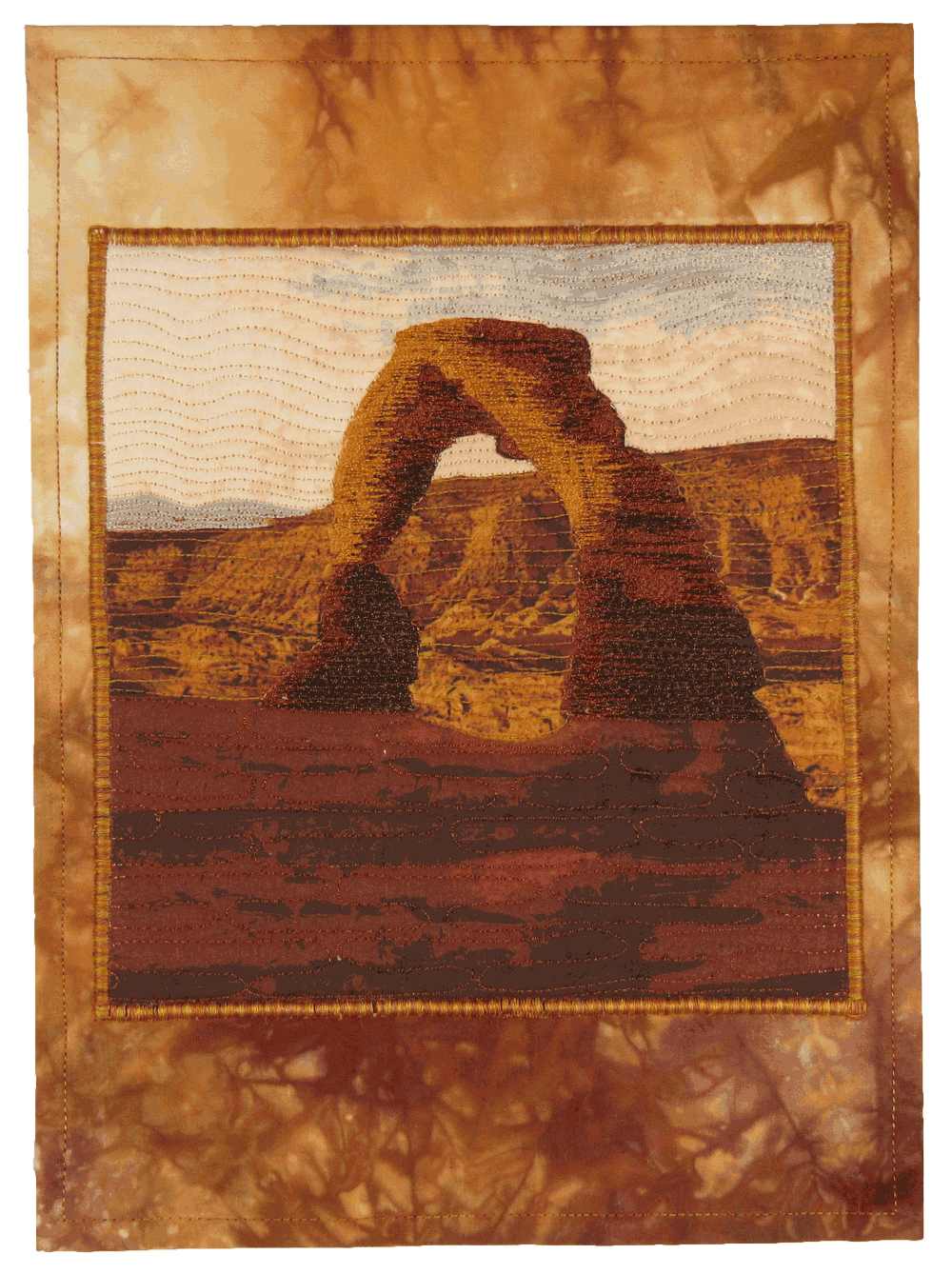
Purple Orchid is from a photo of an orchid that I bought at Home Depot for about $10 several years ago. It bloomed spectacularly for quite a while, but it’s been dormant for a couple years now. Guess it might be permanently dormant at this point.

The splendor of the rose and the whiteness of the lily do not rob the little violet of its scent nor the daisy of its simple charm. If every flower wanted to be a rose, spring would lose its loveliness.
Therese of Lisieux
There are several ways of looking at Delicate Arch. Depending on your preconceptions you may see the eroded remnant of a sandstone fin, a giant engagement ring cemented in rock, a bow-legged pair of petrified cowboy chaps, a triumphal arch for a procession of angels, an illogical geologic freak, a happening—a something that happened and will never happen quite that way again, a frame more significant than its picture, a simple monolith eaten away by weather and time and soon to disintegrate into a chaos of falling rock.
Edward Abbey
After my parents died, I put off sorting through all their old photos that were in boxes in my basement. Last year I finally went through the boxes and found some amazing things that I didn’t expect, including a couple journals that my mother kept when she was a girl. Here are two pages from her 1937 journal, written when she was 14 years old (I’ve included a typed transcript below each entry since I could never read my mother’s handwriting).

Sunday, July 4, 1937 (185th Day—180 Days to Follow)
Independence Day
Shot fireworks all day long. Had one swell time. Following were at picnic at lake: momma, daddy, Esther, Carl, Lill S, Gladys, Alvin, Lilly H, Dolores, Aunts Lue, Lena, Anna, Minnie’s M. and W., Uncles Otto and Fred, Aunt Carie of Libertyville, Walter, Laura Hinty and Dick, Willard and Armela also. Laura and Dickee are staying over till tomorrow. When it was dark we shot off a lot of fireworks which we had a lot of. Got ice cream after all was done.

Monday, July 5, 1937 (186th Day—179 Days to Follow)
Laura went home today but Dick is going to stay till Saturday. After supper went to Crystal Lake to see the fireworks display. There also was a carnival there. Dick, Dolores, and I went on a lot of rides at the carnival. The fireworks were swell. Everyone says they were the best they had ever seen. For the finale there were 50 rockets in air at once. Got to bed at 1:00 o’clock A.M.
These journal entries were the inspiration for my latest donation quilt for the Alzheimer’s Art Quilt Initiative — Fireworks.
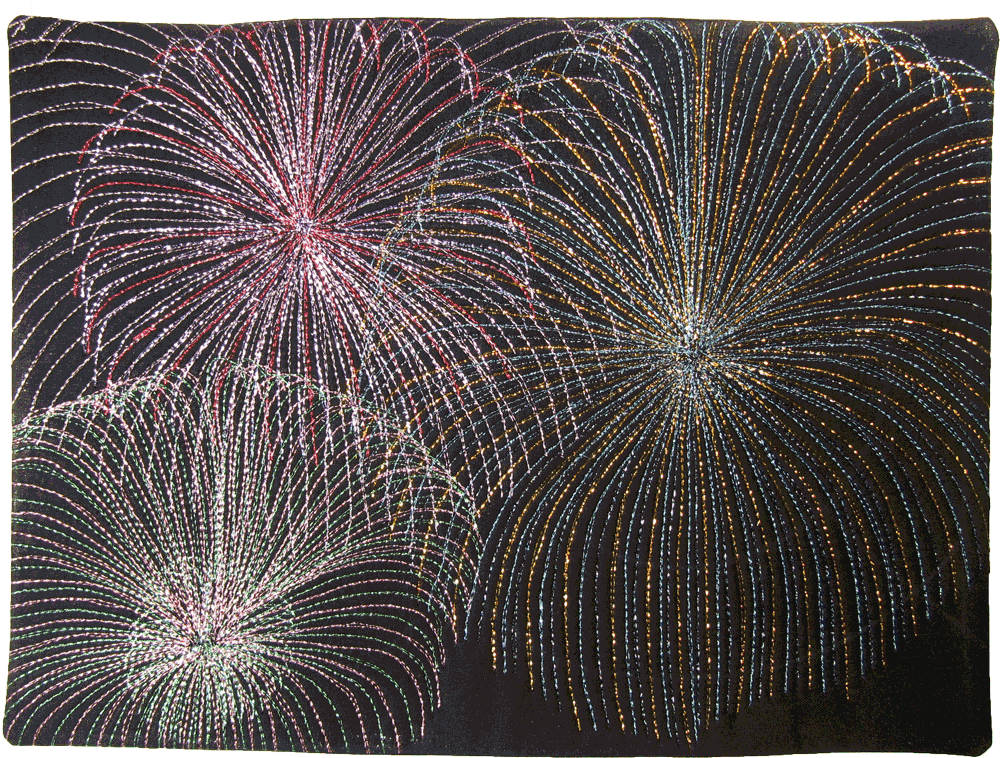
I had fun playing with metallic threads to try to capture the sparkle of fireworks. I haven’t used metallic threads very much, and I learned a few things with this quilt. I used two different types of thread–a flat glitter hologram thread (such as the gold on the right side), and a metallic thread (such as the blue on the right). Both of these threads are from Superior Threads. Superior recommends using a size 90 topstitch needle for both threads, but I found that a smaller size 80 topstitch needle worked best for the flat glitter thread, and a larger size 100 topstitch worked best for the metallic thread. I had no trouble quilting with the metallic thread, but I found that the flat glitter thread behaved much better when not stitching over other threads. I ran into a lot of thread breakage when I tried to stitch the flat glitter thread over the metallic thread. When using these types of specialty threads, I found that a bit of patience and experimentation leads to better results.
You can look up at the stars and every night they’re going to be in the same place, but you can launch a six inch shell and you don’t really know what it’s going to look like until it actually performs.
James Sousa
Fireworks are an art form that uses the night sky as the canvas.
Larry Crump
I was away at a quilt retreat for a few days this week with some amazing quilters. A few of them have web sites, and they’re worth a look — Wendy’s art quilts, Stephanie’s wearable art, and Lois who’s known for rust dyeing. We had a great time and all got a lot of work done. I spent my time quilting/thread painting a number a small quilts and finished quilting six, but I left the binding/finishing work for after the retreat.
I’ve now completed the first two which I’ll donate to AAQI. Both of these quilts started as photos that I took, edited in Photoshop and then printed on fabric. I don’t particularly like binding quilts, especially small ones, so I thought I’d try some different techniques to see which I liked best. For this first quilt, I took 1.25 inch strips of the purple fabric with fusible on the back (I used Steam a Seam since that’s what was handy). I fused about a half inch to the front of the quilt and then turned it to the back and fused the rest. (You can see more complete directions at Laura Wasilowski’s web site.) I finished the binding with a double blanket stitch along the fused border. Here’s Dahlia.

For the second quilt, I thought I’d give it a bit of a frame. For this I used some Pellon Peltex 72 which is a very thick, stiff, ultra-firm stabilizer with fusible on both sides. I started with a 9 by 12 inch piece of the Peltex and wrapped the orange fabric around it. I then cut another piece of Peltex a half-inch smaller than the quilt and I used it to fuse the quilt to the orange ‘frame’. I then satin stitched around the quilt. I really like the end result — it’s stiff enough to hang on the wall, and the extra layer of Peltex behind the quilt gives it more dimension. Here’s Daylily #2.

One of my latest quilts, Oil and Water Don’t Mix, was juried into the AQS quilt show in Paducah (April 27 – 30). Here’s a full view of the quilt.
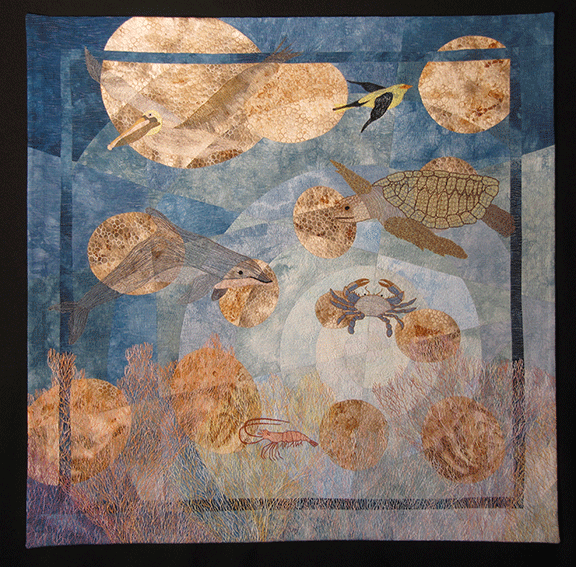
I started working on this quilt last summer, after the oil company that I used to work for caused the largest oil spill in US history. This quilt is my attempt to highlight some of the animals impacted by this oil spill (brown pelicans, loggerhead turtles, dolphins, shrimp, blue crabs, coral, and migratory songbirds like the oriole). Here’s a good article from the National Wildlife Federation on the impact of the oil spill on animals.
I designed the piecing of the quilt in a vector graphics program (Corel D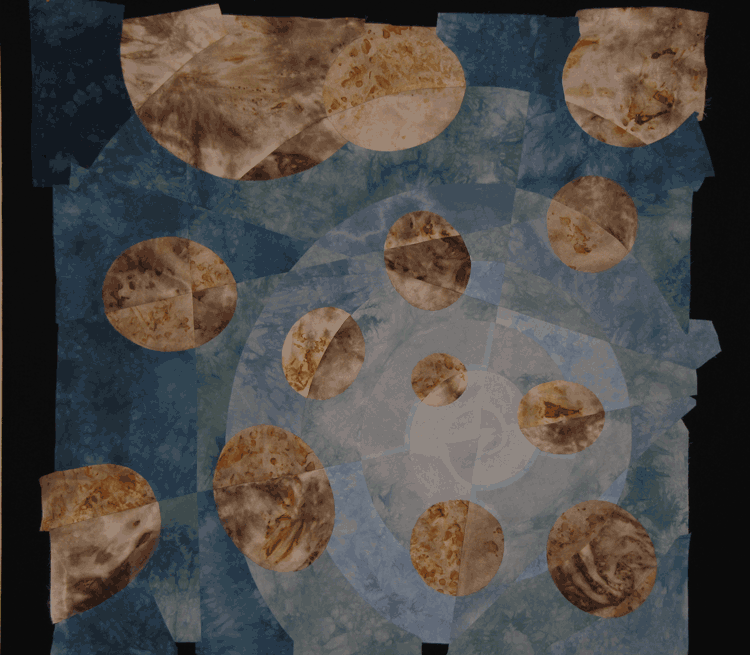 raw) and then sewed it together using blue gradations of my hand-dyed cottons for the water and rust-dyed cotton/silk for the oil. Here’s a picture after it’s all been pieced. At about this point, I decided that I wanted to enter this into the Paducah AQS contest. However, when I looked up the rules, I found that the quilt would need to be at least 40 inches wide and 40 inches high, and this quilt top was only 36 inches square–I was in a bit of a panic. It was a lot of work to piece the top and I certainly didn’t want to start all over. I took a photo of the top and started playing with options in Photoshop. Below are some of the options — a black border (too stark), a dark blue border (better, but not great, and I wasn’t sure if I could get the right color blue), and a border of the rust fabric (OK, but still not great).

I finally decided that it would be best to extend the original piecing design to enlarge the quilt. So, I went back to Corel Draw and added in a 1 inch border for the dark blue, and then I extended most of the original design elements into the enlarg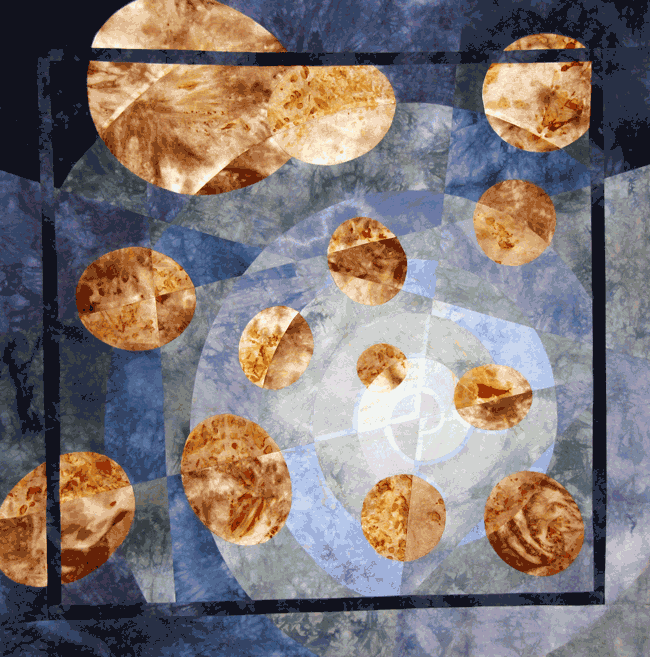 ed border area. It would have been impossible (and too obvious) to try to match everything without the added blue border around the original design. Here’s the pieced top with the new border, and before the quilting.
To finish the quilt, I added tons of thread painting–partly to disguise the imperfections of the new border.
I just completed two more small quilts for donation to the Alzheimer’s Art Quilt Initiative — a great charity that I strongly support since my parents both suffered from Alzheimer’s.
My mother was an avid gardener, a writer of gardening books and an award-winning photographer. While I didn’t inherit her gardening talents, I did start taking photographs at a young age. Both quilts are based on photos that I took of flowers in my back yard. I edited the photos to remove some of the detail, then I had them printed on fabric.
Daylily is about 8 by 6 inches. 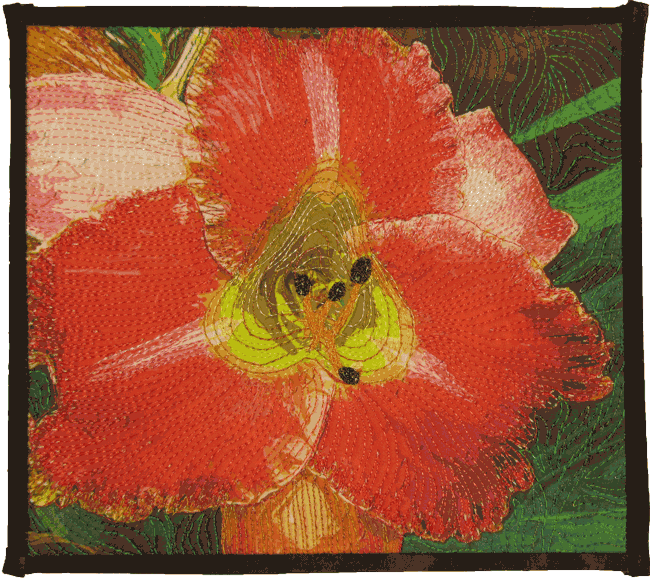
Coneflower is about 10.5 by 8.5 inches. I really like this flower because it’s a bit different with its yellow-green tipped petals.
This weekend I wanted to try to make a more improvisational quilt than I’ve been doing lately. I thought I’d try to use up a lot of the smaller pieces of fabric I had leftover from previous projects.
In particular, I wanted to use of some of the leftovers from A Walk with Sparky, shown here on my design wall.
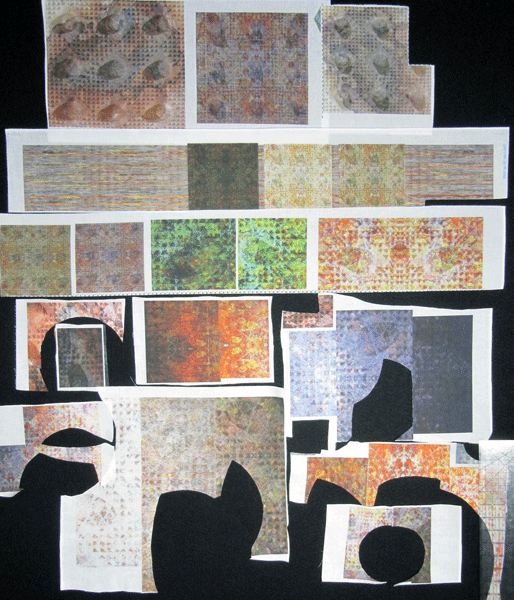
I started cutting these up and sewing them together with some hand-dyed fabric scraps, just matching colors I liked. I started arranging them into longer strips on my design wall, but I still wasn’t sure what to do with them.
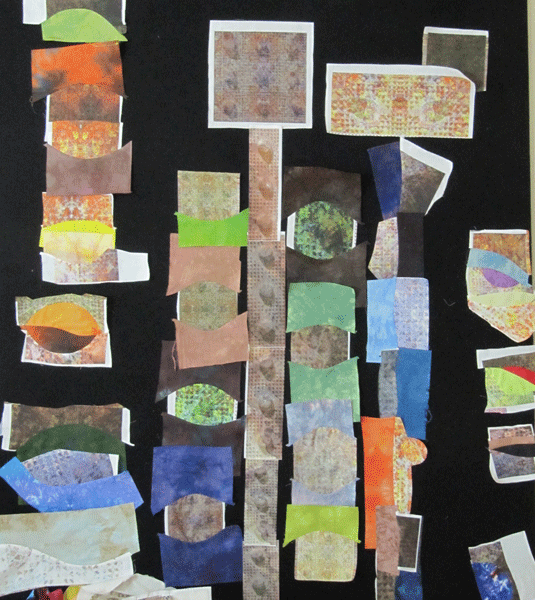
Still without a real plan, I cut some of the pieces and started sewing them into stips of similar colors, light values at one end, progressing to darker values. I was still envisioning this as a vertical arrangement.

When I finally turned the strips horizontally, I realized it looked like a sunset over the farm hills of Wisconsin. I kept the quilting very simple–just echoing some of the curves. Here’s the finished quilt.

Sunset Over Wisconsin
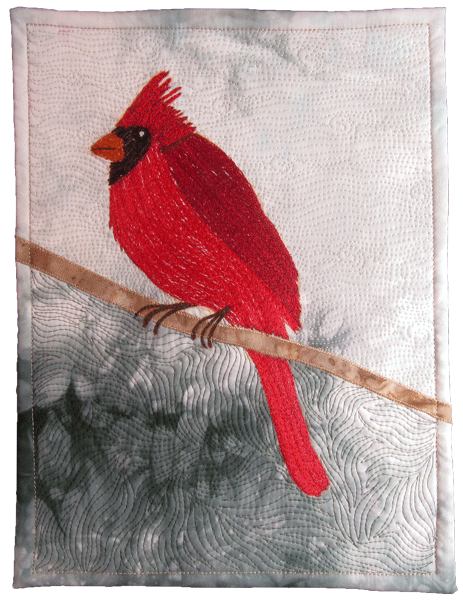
I recently completed this small quilt–it’s about 9 inches by 12 inches. It is a donation quilt for AAQI (as soon as I get around to sending it in). We have a bird feeder right outside our kitchen window, and at this time of year, the cardinals that come to visit are one of the few bright spots in the yard. Often we’ll see several male and female cardinals sitting in the pine tree, waiting for their turn at the feeder.
The quilt is made from a single piece of hand-dyed fabric with a piece of rust-dyed cotton/silk for the branch, and then lots of thread.
 Color On Cloth